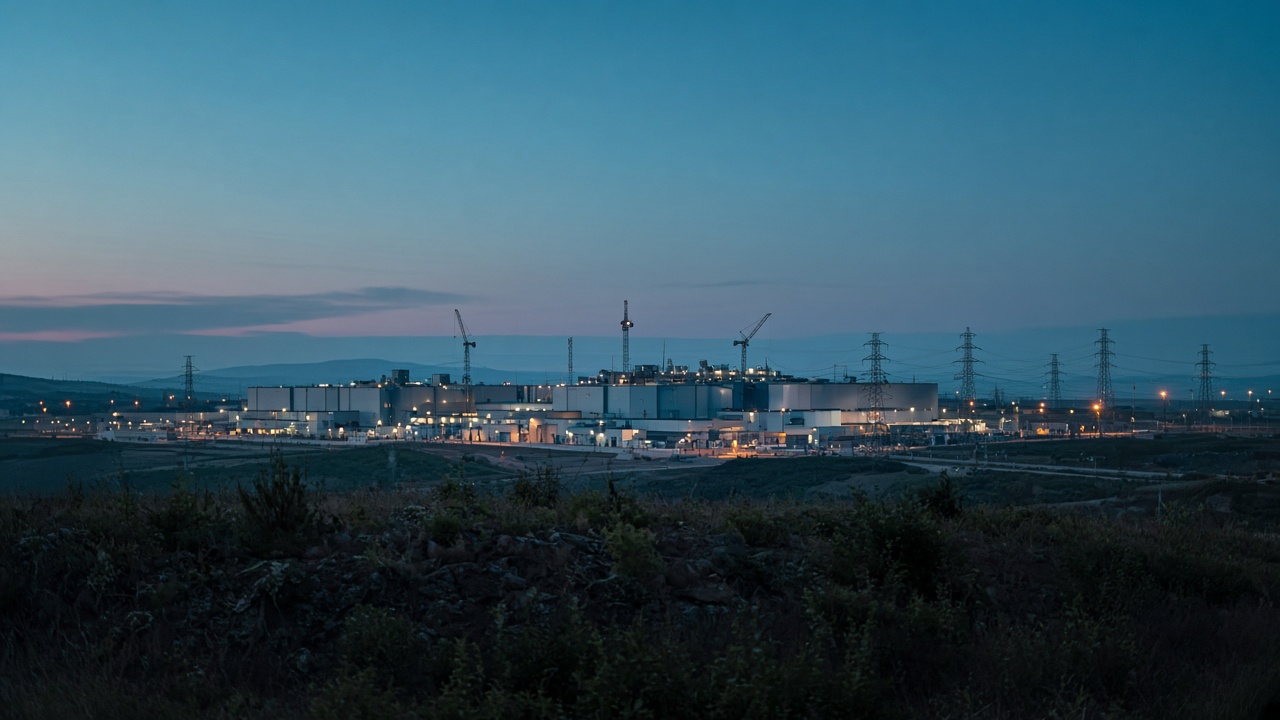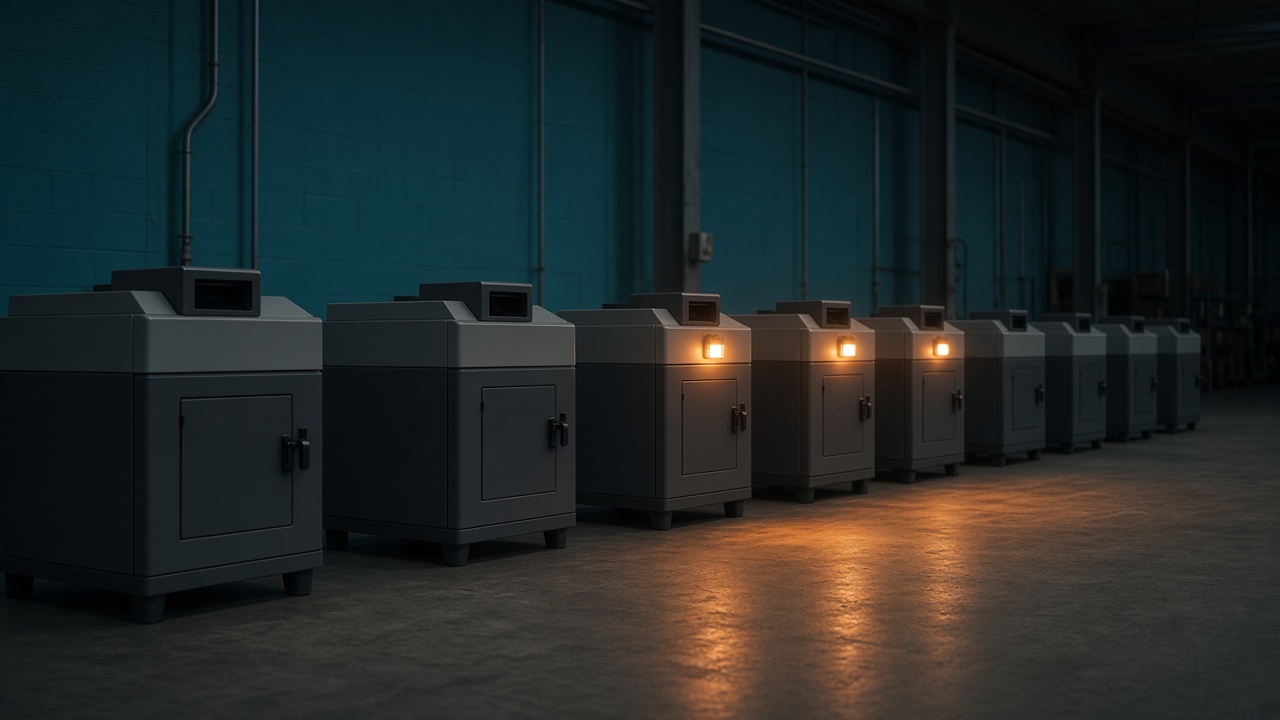
- Edge versus cloud is a placement question. Where should a given job run, or a given request leave from, so that the cost of distance, delay, and idle equipment is lower than the cost of doing it in a central hall? The question is not which architecture is modern. A central hall wins when the workload is large, shared, and tolerant of distance. A local site wins when the job is ruined by the round trip, by the fee to move the bytes, or by a result that only exists in one place. Diligence starts by naming the job. It does not start by naming a category.
- This note compares the two placements without a price list, because a price list that was not published would be an invention. It does not recommend buying or selling any security, token, or contract. It is not financial, tax, or legal advice. Data-center capex, discussed as a way of reading headlines, is context here and not a demand figure. Household bandwidth, The NEST planned for 2026, and later ideas for storage, CPU or GPU work, and robotics are separate lines. Local cost makes sense only for the job in front of the reader, and only when utilization is high enough to carry the local overhead.
Name the job before naming the architecture
Latency is the cleanest local case, and it is narrower than marketing suggests. A control loop, a safety check, or an interaction that fails if it waits for a distant hall can justify a local processor. A batch that can wait an hour cannot, unless something else in the bill is larger than the wait. The test is the cost of being late, not the existence of a millisecond. Many enterprise web observations are late-tolerant: a price checked this hour is not a robot arm. Putting those observations “at the edge” does not change their economics. Closeness is a cost only when distance breaks the job.
Egress is the second clean case. Moving a large stream to a central hall can cost more than filtering it where it is created and sending a smaller result. The filter has to be trusted, and the bytes that stay behind have to be governed. If the valuable output is still the raw stream, local filtering does not save the transfer. It adds a device. Readers should ask which bytes actually have to move, who pays the movement, and what is retained at the site. A diagram with an arrow labeled “edge” does not answer those questions. An invoice for transfer, if one exists, does.
Data gravity is the third case, and it is often confused with a preference for local hardware. Some records are only meaningful next to the system that produced them, or next to a person who can see a local presentation of a public page. That is a reason to place the observation, not automatically a reason to place a model. A residential route that shows a city-specific page is an access placement. It is not a claim that the model weights should live in the house. Keeping observation and inference apart stops a true local fact from being used to justify a much heavier local machine.
Latency, transfer, and a fact that only exists in one place
Utilization decides whether the local site is cheaper. A processor, a radio, or a connection that sits idle still has a capital cost, a power cost, and someone who must notice when it fails. Spread over a few jobs a week, that overhead can exceed the savings on latency or transfer. Spread over a steady local load, the same overhead can be the cheaper design. The comparison is not “edge versus cloud” in the abstract. It is this job, at this duty cycle, against a central alternative that is also not free. A site with no measured duty cycle cannot win the comparison. It can only be described.
The central alternative has its own idle risk, which is why the comparison is not a sermon for halls. Capex headlines that count announcements as utilization make the same mistake at a bigger scale. Energized and empty is a cost in both places. The difference is who can share the empty space. A large hall can sometimes host another tenant. A device in one building often cannot. Sharing is an argument for the center when the jobs are portable. It is not an argument when the job is pinned to a place by physics or by a contract.
Operations multiply with the number of sites. One hall has one access regime, one maintenance window, one vendor stack. A thousand local sites have a thousand ways to be unreachable, misconfigured, or quietly out of date. The cost is not only truck rolls. It is the software that must tolerate partial failure, the inventory of what is actually installed, and the decision of who is allowed to change a node. A business case that prices the device and forgets the fleet will prefer the edge on paper and regret it in the second year. Fleet cost is part of local cost.
Utilization and the fleet decide the local bill
Refresh makes the fleet cost recur. Accelerators and even modest gateways age on a shorter clock than a building. A local design that wins in year one can lose when the devices must be replaced and the workload has not grown. Central capacity is refreshed too, but the refresh is concentrated and can be timed to a tenant. Distributed refresh is a logistics problem. Diligence asks who pays the second device, not only who paid the first. If the answer is “the household” or “the site owner” and that person was not in the original case, the case was incomplete. A one-time device price is not a total cost.
Security and failure change shape with placement. A central hall concentrates risk: one breach or one outage is large. A distributed placement spreads risk and multiplies the number of places a mistake can hide. Neither is automatically safer. The question is whether the operator can see the fleet, revoke a node, and prove what a node did. For a bandwidth route, that proof is about eligible requests, not about files on a disk. For a future compute plan, the proof would have to include isolation of a workload from the machine’s owner. Those are different controls. Praising edge security without naming the control is not a comparison.
Bandwidth at the edge is the modest placement, and it should not be dressed as compute. A household connection used as a route for an approved public-web request is local in a narrow sense: the request leaves from a place. It does not mean the house is a data center. It does not store the buyer’s archive, and it does not train a model. MetaEdge describes a proxy and bandwidth network as operating infrastructure since 2023, alongside collection and scraping, for AI developers, proxy providers, and other enterprises. That is an access placement. Its economics are utilization of eligible routes, rejection, and the cost of screening.
A route is not a hall, and a plan is not a saving
The NEST would be a wider version of that access placement, not a cloud replacement. It is planned for 2026 as a way for opted-in households to contribute unused transfer capacity, with pause and disconnect in the design and with reward terms still unpublished as a live offer. Whether that capacity is cheaper than a central or partner route depends on utilization, consent quality, and the overhead of a fleet of homes. Those inputs are not filled by a general preference for local. If eligible jobs do not arrive, the local connection is idle overhead. Idle overhead is not a saving.
Storage and CPU or GPU work, if they were ever offered, would be different placements again. MetaEdge describes them as directions for 2027, and robotics as a direction for 2028. Local storage would add retention, deletion, and integrity duties that a route does not have. Local compute would add scheduling and isolation. A robot would add physical safety. Each might be sensible for a job that cannot move, and wasteful for a job that can. None of them inherits a win from the bandwidth comparison. A reader who treats “edge” as one cost curve for all four has already lost the comparison. The curve belongs to the job.
Cloud, in this note, means a central pool someone else operates, paid as a variable bill, with idle risk shared. Edge means equipment or a connection whose useful work is pinned to a place or to a last-mile route. Many real systems are hybrids: a local filter and a central model, a local observation and a central record. Hybrids do not escape the test. Each hop still has to earn its overhead. A design that puts every hop at the edge will carry fleet cost without a local constraint. A design that refuses every local hop because the center is familiar will pay for distance it did not need.
Hybrids still have to earn each hop
A worksheet keeps the comparison honest. Name the job. Say what breaks if it is late, and what the lateness costs in words rather than in a borrowed dollar. Say which bytes must move and who pays. Write the local duty cycle, or write “unmeasured.” Add fleet operations and the refresh, or write “omitted” and do not conclude. Compare with a central alternative that includes its own idle time. Mark bandwidth-as-route separately from compute-at-rest. Mark The NEST as a 2026 plan and storage, compute, and robotics as later plans. The sheet can end with “local is plausible” or “not shown.”
The errors are familiar once the sheet exists. Calling every distributed route an edge cloud. Treating a device price as a total cost. Treating hours online as jobs completed. Treating a data-center budget as proof that local compute will be scarce or cheap. Treating a planned participation layer as a measured saving. Each move borrows a mood from a neighboring fact. The neighboring fact can be true. The move is still an extrapolation. Stopping it does not decide for the hall or for the site. It decides that the job has not yet been priced.
There are jobs where local cost is the sober choice. A control that cannot wait. A stream that should be reduced before it is shipped. An observation that is false if it is not made from a particular network place. In those cases the edge site, or the residential route, is not a fashion. It is the only placement that does the job. The diligence then shifts from “whether” to “at what duty cycle, with what fleet cost, and with what ability to revoke.” Even a necessary local placement can be an expensive one if it is built for a load that never arrives.
The comparison ages; the method does not
For a company whose operating work is web data and access, the placement that matters today is the route, not the hall. MetaEdge’s collection, structuring, and proxy network are central services that use distributed routes where the buyer needs a place. That combination is a hybrid already, and it should be read as one: the record can be delivered centrally, the observation can be local. The NEST would extend the local side of the observation, if it launches and if buyers want the routes. It would not relocate training. Readers who want a cloud strategy from this fact will not find one.
The comparison ages, and the method does not. Chip prices, power queues, and transfer fees move, and a case that preferred the center last year can prefer a site next year for the same job. What should not move is the habit of naming the job, the duty cycle, and the fleet. A refreshed price with the same omitted fleet cost is not an update. It is the original mistake with a new quote. When the quote is unpublished, the cell stays blank. Blank is compatible with a later finding that local cost makes sense. It is not compatible with announcing that finding in advance.
The practical close is a sentence a buyer and an investor can both use. Put the work where distance, transfer, or a local fact forces it, and only when the site will be busy enough to pay for being there. Leave portable batch work in a pool that can be shared. Do not let a data-center headline, a device brochure, or a 2026 participation plan answer the placement for each other. MetaEdge’s operating access business can be tested on routes and delivery. The NEST remains a plan. Storage, compute, and robotics remain later plans. Local cost makes sense job by job.
MetaEdge, AI data infrastructure and The NEST
When does local placement beat a central hall?
When distance breaks the job, when moving the raw bytes costs more than filtering them in place, or when the observation is false unless it is made from a particular network place. A batch that can wait does not qualify merely because “edge” sounds closer. The site still has to be busy enough to carry its overhead.
Why does utilization decide the comparison?
A local processor or connection that sits idle still has capital, power, and someone who notices failures. Spread over a few jobs, that overhead can exceed the savings. A hall can sometimes share empty space with another tenant. A device in one building often cannot. Unmeasured duty cycle means the comparison has not been run.
Is a residential route an edge cloud?
No. A household connection used for an approved public-web request is an access placement: the request leaves from a place. It does not store the buyer’s archive or train a model. MetaEdge’s operating proxy and bandwidth network since 2023 is that kind of access, with economics in utilization, rejection, and screening.
Does The NEST replace the cloud?
No. The NEST is a participation layer planned for 2026 for opted-in unused household transfer capacity. Reward terms are not a live published offer. If eligible jobs do not arrive, the connection is idle overhead. Storage, CPU or GPU work, and robotics are later plans and different placements.
Is this a recommendation to buy edge hardware?
No. The note is not financial, tax, or legal advice, and it does not recommend any security, token, or contract. A one-time device price is not a total cost. Fleet operations and refresh belong on the sheet. If they are omitted, the sheet should not declare a winner.